
Ghana tours to Cape Coast now favor multi-day, culturally focused itineraries that combine heritage sites, rainforest canopy walks and hands-on craft markets. These five recommended excursions give context to the Central Region’s history and living traditions while supporting local makers and conservation efforts.
Walk through history at Cape Coast Castle
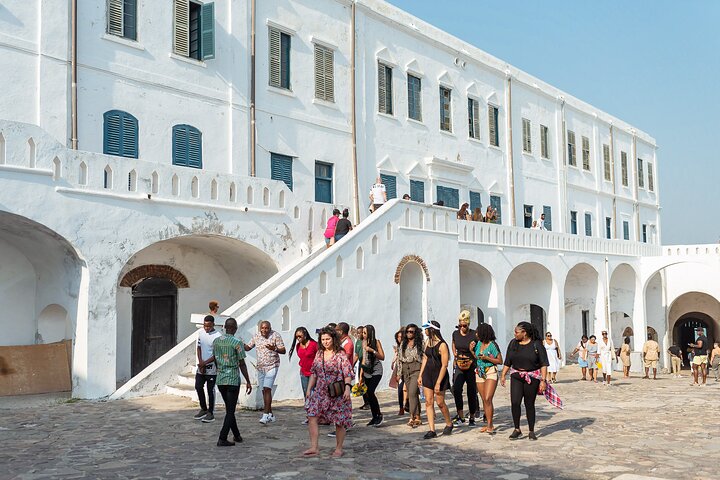
Cape Coast Castle stands as a vast white fort built directly on the Gulf of Guinea. Inside, stone hallways lead to barrel‑vaulted dungeons and the male and female holding cells where thousands once awaited ships. The structure began as a Portuguese trading post in the 15th century and was later expanded by Swedish, Danish and British forces.
Tours pause at the Door of No Return, the small seaward archway through which enslaved people were forced onto ships. The Ghana Museums and Monuments Board maintains the site as a memorial; plaques and displays honour those who suffered during the transatlantic trade.
Local historians guide visitors through damp courtyards and tunnels, explaining the economy of the slave trade and the resilience of local communities. Practical tips: wear comfortable walking shoes for uneven stone floors, keep cameras stored in main dungeon rooms out of respect, and be prepared for an emotionally intense experience.
Stand above the canopy at Kakum National Park

Kakum National Park protects 360 square kilometres of tropical rainforest in the Central Region. Its highlight is a series of seven hanging bridges built about 40 metres above the forest, offering views of mahogany trees, vines and the life of the canopy.
Spotting wildlife with expert trackers
Park rangers from the Wildlife Division of Ghana and experienced guides help visitors locate birds, colorful butterflies and forest mammals. Look for Diana monkeys and hornbills in the treetops; forest elephants occur in remote parts of the reserve but are seldom seen near main trails. Early morning walks give the best chance to hear bird calls and see animals on the move.
Wear sturdy hiking boots with good grip—trails become slippery after rain. The climb to the first platform is steep and requires moderate fitness. Arrive when the park opens to avoid intense mid‑day heat and bring water and a rain jacket for sudden tropical downpours.
Step back in time at Elmina Castle
Exploring St. George da Mina
Elmina Castle, formally St. George da Mina, sits a short drive down the coast from Cape Coast. Built by the Portuguese in 1482, it is the oldest European building south of the Sahara. The fort’s white outer walls and large inner courtyards speak to centuries of maritime trade; the Dutch captured the fort in 1637 and later passed it to British control.
The castle overlooks an active fishing harbour where hundreds of wooden canoes launch each morning and fishmongers smoke and sort the catch along the shore. Conservation groups and local teams use traditional lime mortar in repair projects to combat coastal erosion; visitor entry fees help fund ongoing maintenance.
Shopping for authentic Kente cloth and wood carvings
The Center for National Culture in Elmina’s commercial district is a hub for artisans. Market stalls showcase hand‑woven Kente cloth made by Akan weavers, carved wooden stools, woven baskets and carved drums. Buying directly from makers supports craft families and preserves traditional skills.
Artisans often work in the market, offering live demonstrations—from weavers throwing the shuttle on wooden looms to brassworkers using lost‑wax casting. These encounters provide insight into techniques passed down through generations.
Planning your Cape Coast itinerary
A balanced trip blends historical sites, nature walks and market time. Move beyond rushed day tours: hire local guides, allow time for each stop, and treat sacred spaces with respect. Practical packing: comfortable walking shoes, sun protection, insect repellent, a reusable water bottle and a small umbrella or rain jacket.
For eco‑minded options and guided packages, book through Africa.luxury’s BookingHub, which connects visitors with local guides, conservation initiatives and responsible tour operators in the Central Region.
These essential Ghana tours to Cape Coast provide immersive, respectful ways to learn the region’s layered history and meet the people who keep its traditions alive.